 Grutas Tolantongo Tour
The Complete Grutas Tolantongo Tour Guide
Grutas de Tolantongo is a geothermal canyon in Hidalgo, Mexico, about 4 hours from Mexico City — which means every tour is a 12–14-hour day with a 5:30 am pickup and a long drive back at night. The payoff: cliffside thermal pools built into a 300-metre canyon wall, a natural cave with warm waterfalls, a tunnel you can swim through, and a milky-turquoise thermal river. But the canyon is cash-only with no ATMs, so the money logistics and the fatigue are the real things a tour solves for you.
What the canyon actually is
Grutas de Tolantongo sits in the municipality of Cardonal, in the Sierra Madre Oriental mountains. It’s owned and run by a cooperative of 112 local ejido families. The headline features are: the cliffside terraced pools (man-made, built into the mountainside, 36–38°C), the main cave or grotto (natural, with warm waterfalls inside), a tunnel (natural, about knee-high water, one short section where you swim with ropes provided), and the thermal river (natural, milky turquoise from minerals, about 30°C, with cascades you can sit under). There’s also a zip line and a suspension bridge. The park sits in a 300-metre-deep canyon, so the drive down is steep with switchbacks.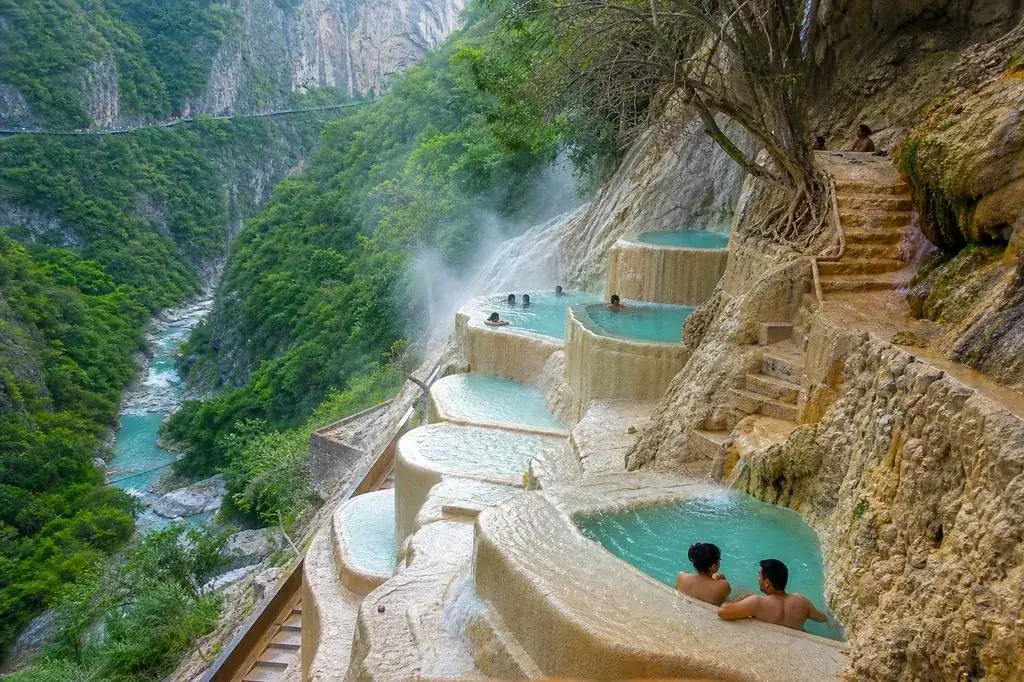
Man-made pools versus natural features: what you’re actually paying for
The Instagram-famous pools are the man-made terraces built into the cliff — they’re beautiful and the water is warm (36–38°C), but they’re not the best thing there. The real draw is the cave, the tunnel, and especially the thermal river, which is natural mineral water, warm, and honestly more memorable than the pools. Reviewers are often surprised by this: they come expecting the pools to be the highlight and find themselves spending the most time in the river instead. A good guide will help you understand the difference.
The 14-hour day: what time it actually takes
Tours leave your CDMX hotel around 5:30 am. You drive 4 hours north (with a breakfast stop), then spend about 4 hours at the park — maybe 2–3 of those actually in or around the water — then drive 4 hours back, arriving around 7–8 pm. It’s a long day, honestly. Reviewers say it’s worth it, but several mention that Tolantongo would be better as an overnight trip to avoid the rush. If you go with a tour, the guide handles the night drive back, which is the hardest part.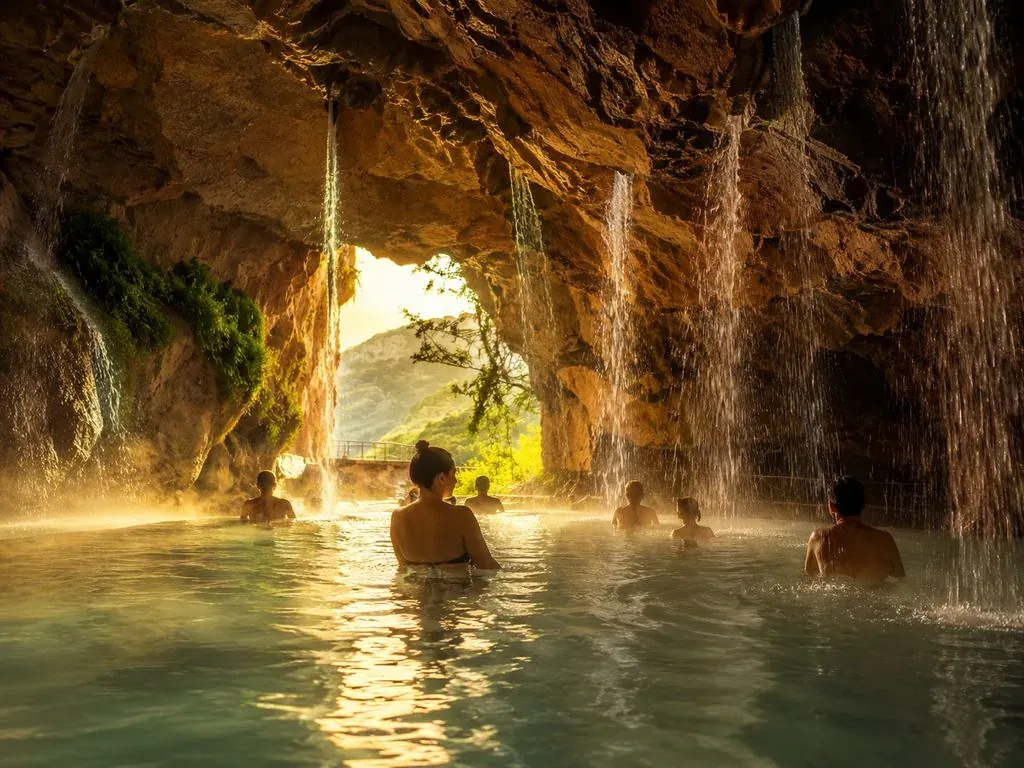
The cash-only logistics
This is the trap most people miss. The park charges 230 MXN for entry and 50 MXN for parking, and there are no ATMs anywhere. Lockers cost pesos; food vendors want pesos; the zip line and suspension bridge want pesos. A tour doesn’t include the park fee or these extras, but the guide will tell you what you need on the bus ride up. Bring more cash than you think you need. Vendors sell cheap water shoes and phone pouches on-site, which most reviewers wish they’d bought earlier.
Who should book a tour versus staying overnight
Book a tour if: you’re not comfortable driving the Cardonal road at night, the long day doesn’t bother you, or you want to hit the canyon and be back in the city the same night. The $119 price is often cheaper than renting a car and buying fuel anyway. Stay overnight instead if: you want a relaxed pace, you’d rather not drive at midnight, or you want to soak the next morning without rushing. The park has basic hotels and riverside camping; many visitors book a tour for the day and crash locally instead of driving back. Reviewers say Tolantongo deserves two days — one to get there and soak, one to explore at your own pace.
When to go, and why November is the month
The park is open year-round. The water stays warm in winter (36–38°C in the pools, ~30°C in the river), so temperature is never the blocker. October, November, and early December are the sweet spot: the weather is dry, the air is cool, and cool mornings make the warm pools feel best. November is the star month. Weekends and Mexican holidays (especially Easter week) get very crowded; if you can go mid-week, the canyon is far quieter and you’ll actually enjoy it.
The bottom line
Grutas de Tolantongo is the hardest easy day trip from Mexico City. The drive is brutal, the park is cash-only, and you need to know the difference between what’s man-made and what’s natural to set your expectations right. A tour solves the transport and logistics problem; you show up and soak. But if you can swing it, stay overnight instead — the place is worth more than one rushed day.
Ready to book?
If the 14-hour day sounds fair, the small-group tour from Mexico City is the one most people take, and dates close out around holidays and long weekends. Check availability below, or compare every departure on the all-tours page.
Frequently asked questions
Do I need a guide to visit Grutas de Tolantongo?
No — the park is open to independent visitors. But the 4-hour drive each way, the winding descent and the cash-only logistics are exactly what a tour removes. I compare both routes on the going without a tour page.
How long is a Tolantongo tour from Mexico City?
Plan on 12 to 14 hours door to door, with a pickup around 5:30 am and a return to the city around 7 or 8 pm. The how long to spend page breaks down where those hours go.
What should I bring on the day?
Swimwear, a towel, water shoes, a warm layer for the early pickup and more pesos than you think — the park has no ATMs. The full packing list is on the what to wear page.